|
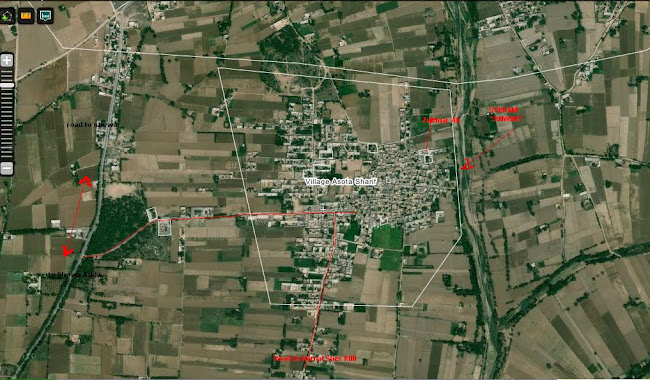
ASOTA SHARIF
Tuesday, January 15, 2013

jumble4
Education in Pakistan
(policies and policy formation)
Post independence education
All Pakistan education conference 1947After freedom in 1947 a conference was arranged to structure the education system of Pakistan. Quaid-e-azam could not attend this due to illness, but he forwarded his message which later laid down the foundation for recommendations of education policy. His message contained four major aspect;
1). Education system should suit the genius of Pakistan.
2) It should be consonant with our history and culture.
3) It should inculcate high sense of honor and integrity.
4) It should emphasis on science and technology.
The major recommendations of the conference were:
Education should be teamed with Islamic values.
Free and compulsory education in Pakistan.
Emphasis on science and technical education.
Implementation:
This policy could not be implemented properly due to increased number of immigrants and other administrative problems of new born country. So more or less british colonial system was continued.
Report on commission on national education, 1959
The commission on national education is a beacon for educational history of Pakistan because of its thorough study of Pakistani culture and need of the people.
Its recommendations were as follows:
1. Character building.
2. Compulsory primary education.
3. Subject was bifurcated in core and additional subjects.
4. National language as medium of instruction.
5. Focus on science and technical education.
6. Examination system should be combination of internal (25%) and external (75%) evaluation.
7. Elimination of illiteracy.
8. Religious education should be introduced in three stage i.e. compulsory at middles level, optional at secondary level and research at university level.
9. Establishment of university grants commission.
10. Three-year degree program.
Implementation:
Although it was an excellent policy, but it failed due to lack of proper planning and implementation. The proposal of three-year degree program created unrest among students and parents and this was withdrawn.
Education policy 1970
This policy has following salient features:
Emphasis on ideological orientation.
Emphasis on science and technology education.
Decentralization of educational administration.
Eradication of illiteracy.
Formation of national education corps.Implementation:This policy was not implemented due to change in government.
Education policy 1972-1980
Salient features of this policy are.
1. Promotion of ideology of Pakistan
2. Personality development.
3. Equality in education.
4. Universal education.
5. Curriculum based on socioeconomic needs of the society.
6. Integrated technical and science education.
7. Active participation of teacher, students and parents in educational affairs.
8. Nationalization of educational institutions.
Implementation:
This policy was a good approach towards betterment, but has many drawbacks due to which it cannot be achieved thoroughly e.g. universal basic education, shift towards agrotechnical studies etc. National educational policy, 1979In 1979 National Educational Conference was held for reviewing the education system and developed following aims:
Fostering loyalty to Islam.
Creation of concept of muslim Ummah.
Promotion of science and technical education.
Equal opportunities.
The following strategies were suggested to achieve above goals:
1. Curriculum revision.
2. Merging madarsa and traditional education.
3. Urdu as a medium of education.
4. Effective participation of community in literacy programs.
5. Linked scientific and technical education.
6. Separate instates for male and female.
7. Mosque schools.
Implementation;
This policy was not implemented properly and failed due to lack of planning and financial resources.
National education Policy, 1992-2002
This was announced in December 1992. the major aspect, aims and goals are as follows:
1. Promotion of Islamic values through education.
2. Improvement in women education.
3. Diversification of general and technical education at secondary level.
4. Demand oriented curriculum.
5. Expended span of graduation and post graduation.
6. Use of AV aids promoting private sector to participate in enhancement of literacy.
Implementation:
This policy could not be implemented due to change in political scenario of country.
National education policy 1998-2010
Major objectives of this policy were as follows;
1. To make the Quaranic principles and Islamic practices an integral part of education system.
2. To achieve universal primary education.
3. To meet the basic educational needs of every individual.
4. To expand the basic education.
5. To ensure equal opportunity of higher education.
6. Laid emphasis on diversification.
7. To make curriculum development a continuous process.
8. To introduce in-service training programs for betterment of education.
Suggestions for achievement of above goals were:
Diversification of curriculum.
Expansion and emphasis on technical and science education.
Upgrading the quality of Deeni Madaras.
Teacher training programs both pre and in service.
Introduction of idea of multiple text book.
Development of National Testing Services.
Introduction of comprehensive monitoring system.
Education sector reform 2110---2005
This originated from the policy of 1998-2010 and focuses on development of human resources. The major thrust areas of ESR are as follows:
1. Promulgation of compulsory education.
2. Free text books.
3. Equal access to opportunities of learning.
4. Improving all aspects in quality education.
5. Introduction of new educational curricula.
6. Development of training learning resources and materials.
7. Offering incentives for private sector.
8. Introduction of computer course at all levels.
9. Strengthening of research in higher education.
10. Grant for affiliation of madarsas.
Now a days draft of new educational policy of education is in process of development.
(policies and policy formation)
Post independence education
All Pakistan education conference 1947After freedom in 1947 a conference was arranged to structure the education system of Pakistan. Quaid-e-azam could not attend this due to illness, but he forwarded his message which later laid down the foundation for recommendations of education policy. His message contained four major aspect;
1). Education system should suit the genius of Pakistan.
2) It should be consonant with our history and culture.
3) It should inculcate high sense of honor and integrity.
4) It should emphasis on science and technology.
The major recommendations of the conference were:
Education should be teamed with Islamic values.
Free and compulsory education in Pakistan.
Emphasis on science and technical education.
Implementation:
This policy could not be implemented properly due to increased number of immigrants and other administrative problems of new born country. So more or less british colonial system was continued.
Report on commission on national education, 1959
The commission on national education is a beacon for educational history of Pakistan because of its thorough study of Pakistani culture and need of the people.
Its recommendations were as follows:
1. Character building.
2. Compulsory primary education.
3. Subject was bifurcated in core and additional subjects.
4. National language as medium of instruction.
5. Focus on science and technical education.
6. Examination system should be combination of internal (25%) and external (75%) evaluation.
7. Elimination of illiteracy.
8. Religious education should be introduced in three stage i.e. compulsory at middles level, optional at secondary level and research at university level.
9. Establishment of university grants commission.
10. Three-year degree program.
Implementation:
Although it was an excellent policy, but it failed due to lack of proper planning and implementation. The proposal of three-year degree program created unrest among students and parents and this was withdrawn.
Education policy 1970
This policy has following salient features:
Emphasis on ideological orientation.
Emphasis on science and technology education.
Decentralization of educational administration.
Eradication of illiteracy.
Formation of national education corps.Implementation:This policy was not implemented due to change in government.
Education policy 1972-1980
Salient features of this policy are.
1. Promotion of ideology of Pakistan
2. Personality development.
3. Equality in education.
4. Universal education.
5. Curriculum based on socioeconomic needs of the society.
6. Integrated technical and science education.
7. Active participation of teacher, students and parents in educational affairs.
8. Nationalization of educational institutions.
Implementation:
This policy was a good approach towards betterment, but has many drawbacks due to which it cannot be achieved thoroughly e.g. universal basic education, shift towards agrotechnical studies etc. National educational policy, 1979In 1979 National Educational Conference was held for reviewing the education system and developed following aims:
Fostering loyalty to Islam.
Creation of concept of muslim Ummah.
Promotion of science and technical education.
Equal opportunities.
The following strategies were suggested to achieve above goals:
1. Curriculum revision.
2. Merging madarsa and traditional education.
3. Urdu as a medium of education.
4. Effective participation of community in literacy programs.
5. Linked scientific and technical education.
6. Separate instates for male and female.
7. Mosque schools.
Implementation;
This policy was not implemented properly and failed due to lack of planning and financial resources.
National education Policy, 1992-2002
This was announced in December 1992. the major aspect, aims and goals are as follows:
1. Promotion of Islamic values through education.
2. Improvement in women education.
3. Diversification of general and technical education at secondary level.
4. Demand oriented curriculum.
5. Expended span of graduation and post graduation.
6. Use of AV aids promoting private sector to participate in enhancement of literacy.
Implementation:
This policy could not be implemented due to change in political scenario of country.
National education policy 1998-2010
Major objectives of this policy were as follows;
1. To make the Quaranic principles and Islamic practices an integral part of education system.
2. To achieve universal primary education.
3. To meet the basic educational needs of every individual.
4. To expand the basic education.
5. To ensure equal opportunity of higher education.
6. Laid emphasis on diversification.
7. To make curriculum development a continuous process.
8. To introduce in-service training programs for betterment of education.
Suggestions for achievement of above goals were:
Diversification of curriculum.
Expansion and emphasis on technical and science education.
Upgrading the quality of Deeni Madaras.
Teacher training programs both pre and in service.
Introduction of idea of multiple text book.
Development of National Testing Services.
Introduction of comprehensive monitoring system.
Education sector reform 2110---2005
This originated from the policy of 1998-2010 and focuses on development of human resources. The major thrust areas of ESR are as follows:
1. Promulgation of compulsory education.
2. Free text books.
3. Equal access to opportunities of learning.
4. Improving all aspects in quality education.
5. Introduction of new educational curricula.
6. Development of training learning resources and materials.
7. Offering incentives for private sector.
8. Introduction of computer course at all levels.
9. Strengthening of research in higher education.
10. Grant for affiliation of madarsas.
Now a days draft of new educational policy of education is in process of development.
Sunday, January 13, 2013
jumble words 2
In a traditional address to the joint session
of the Parliament, President Asif Ali Zardari has highlighted government’s
achievements and upcoming challenges since coming to power after
elections in February last year.
With regards to education, he announced
that ’a new education policy
had been framed to ensure universal primary education by 2010 and increase
education budget to 4 percent of GDP by 2012.‘
With the universal primary education by 2010
Pakistan will continue to uphold its commitment with the UN Millennium Declaration (watchUniversal
Education Campaign Video below),
reaching the target well before. It’s one of the goals, universal primary
education will ‘ensure that by
2015, children everywhere, boys and girls alike will be able to complete a full
course of primary schooling‘. In September 2000, leaders from around
the world ushered in the new millennium by adopting the Declaration, endorsed
by 189 countries, emerged as a road map setting out goals to be reached by
2015. Pakistan is also signatory to the Millennium declaration. These goals
form the basis for national development efforts.
Education is accepted as a basic right of
everyone both at national and international level. The Constitution
of Islamic Republic of Pakistan, 1973 clearly
lays down the provision in Article 37 (b) that:
“The state of Pakistan shall… remove illiteracy and provide
free and compulsory secondary education within minimum possible
period”.
In Article 26 (1), United Nations Universal Declaration
of Human Rights, 1948, it is clearly laid down that:
‘Everyone has the right to education. Education shall be free,
at least in the elementary and fundamental stages. Elementary education
shall be compulsory.”
In the light of the commitment of the
Government of Pakistan to the achievement of universal literacy and for
the provision of free and compulsory elementary primary education as
prescribed in the Constitution of Pakistan and as outlined under Article
26 of the Universal Declaration of Human Rights ratified by the United
Nations, the country has introduced some twenty-two policies and action
plans since 1947. After 60 years and at the stage of electing political
leadership for the next 5 years, it is time to reflect on the progress
made, lessons learnt and critically examine the setbacks which we might
have suffered on the way, and chart a way forward with a new vigor.
The New National Education Policy, (NEP)
2009 comes in a series of education policies dating back to the very
inception of the country in 1947.
·
The first National Educational Conference (Karachi: Nov. 27,Dec
1, 1947) produced a strong philosophy of as well as a number of
ambitious recommendations indicating the future goals of education in Pakistan
Nevertheless, many of its recommendations remained in documentary form only for
the lack of institutional or economic resources to pursue them.
·
In 1959 Notational Commission on was established which
recommended that education should be made compulsory upto primary level by the
year 1969 and upto middle level by the year 1974.
·
In 1969, the New Education policy emphasized adult literacy.
·
The Education Policy, 1972 anticipated universal primary
education for boys and girls by the years 1979 and 1984 respectively, with its
extension upto middle level in the next three years.
·
The New Education, Policy 1970 recommended a shift to
scientific, technical and vocational education for middle level skilled worker.
It also emphasized a 50: 50 ratio between science and humanities subjects
enrollment.
·
National Education Policy 1979 emphasized the universal primary
education, by 1986-87 utilizing non-formal sources, open ‘Mosque Schools’ and,
‘Mohallah Schools’ for girls on a large scale.
·
Since 1979 no further expansion is seen in the field of
education planning in Pakistan except some new policy-decisions in certain
areas such as primary education, teacher training and higher education and
research. Nevertheless more emphasis is given to universalize the primary education
and quite a number of international projects have been launched in this
field.
·
The Educational Policy 1992 was announced by the Federal
Minister of Education in Islamabad in June, 1992. The following characteristics
were the most important features of this policy:
1. An
emphasis on Privatization.
2. Encouraging
the private sector in education.
·
The recommendations of the education policies were highlighted
in the next five year plans of the country and the targets were set
accordingly, however, meager resources were generally allocated to education
and the education sector could not get a lion’s share in any of the budget
proposal.
Recently, the review process for the
National Education Policy 1998-2010 was initiated in 2005 and the first
document, the White
Paperwas finalized in March 2007. The White Paper became
the basis for development of the Policy document.
Two main reasons prompted the Ministry of Education (MoE) to launch the review in 2005 well before the time horizon
of the existing policy framework (1998 - 2010) had approached.
Firstly, the policy framework has not served
as a satisfactory guide, as the policies pursued under that framework had
not produced the desired educational results. Performance of the education
sector has been deficient in several key aspects, most notably in access
rates, and in quality and equity of educational opportunities.
Secondly, new international challenges like
Millennium Development and Dakar Education for All (EFA) goals, have gained
greater momentum in the intervening years and demanded fresh consideration.
These challenges are triggered by globalization and nation’s quest for becoming
a “knowledge society”. Besides, some compelling domestic pressures such as
devolution of powers, economic development and demographic transformations have
necessitated a renewed commitment to proliferation of quality education for
all.
According to the White Paper, the purpose
of education is:
‘The education system should raise highly
knowledgeable, skillful, productive, creative and confident individuals
who have advanced reasoning and perception of problem solving skills;
are committed to democratic values and human rights; are open to new
ideas; have a sense of personal responsibility; are committed to moral
values; have assimilated the national cultures; are able to
tolerate differences in opinion, faith and culture; have
empathy towards all of humanity; and can participate in
the productive activities in society for the common good using Social
and Physical Sciences and Technology.’
Despite the constitutional guarantee of
free and compulsory secondary education as stipulated in 1973
Constitution, Pakistan has been unable to achieve targets of
universal primary enrollment objectives in over three decades. In Pakistan,
net enrollment rate at the primary level is indicated as 68% in
2005, as per the EFA
Global Monitoring Report, 2008, based on the data provided
by the Ministry of Education, Government of Pakistan. As per findings of Pakistan
Social and Living Standards Measurement PSLM survey (2005-06), the
actual figure of Net Enrollment Rate (NER) for the same year is, however,
as much lower as 53%.
In 2005, of the 67% children enrolled in
primary schools nearly 30% dropped out before completing 5 years of
formal education. Net primary enrollment of Pakistan remains the lowest in
South Asia and the same is true for the annual primary completion rates.
The previous government undertook
several initiatives to increase the access to primary
education across the country including abolition of fees
and provision of free-of- cost textbooks. Pakistan prepared and
launched a National
Plan of Action for EFA (2001-2015) to
achieve goals of EFA. In accordance with targets given in the NPA of
Ministry of Education, Pakistan had planned to increase its
primary level Net Enrollment Rate (NER) up to 79% by the year 2005.
However, Pakistan has not been able to achieve the targeted net primary
enrollment rate set for 79%3 in 2005, and was only able to achieve an
NER value of 68% by this in the same year. Under the EFA and MDGs
frameworks, the government of Pakistan has committed to achieve 100% net
primary enrollment by the year 2015.
In 2005, Pakistan’s adult literacy rate (for
population aged 15 years and above) was 50% [64% for men and 36% for
women] which is among the lowest in the world and much below the South
Asian average of 65%.
According to 1998 Census, there
were are about over 50 million illiterates of age 15+ in Pakistan.
This number may have increased further, it is feared. The main cause of
this higher rate of illiteracy is the failure of formal education system
to enrol all the school aged children and retain them up to Grade 5.
Although few half baked programmes ofsome adult literacy programmes were
launched in the past, and some are still being implemented, their scope is
limited and quality is questionable. At the national level, the
question as it is not certain that to whether Pakistan will be able to
achieve the EFA targetsobjectives and the MDGs given the past trends, and
keeping in view the present state of the education system is highlighted
when the present status of key indicators of education in this country.
For example, Pakistan has not been able to achieve an adult literacy rate
of 60% by 2005, as the Government projected in its annual Millennium
Development Goals Report in 2004, and literacy target of 61% by 2005,
envisaged in the National Plan of Action (2001-15) for EFA, published by
the Ministry of Education.. The government of Pakistan has set itself set
the target of achieving 68% adult literacy rate by the year 2015 .
Pakistan can not eradicate illiteracy without
making primary education totally free and compulsory, and expanding
investment on adult literacy and Non-formal Basic Education programmes.
Country wide literacy programmes are urgently needed to promote peace
and tolerance in the society, to strengthen democratic practices, to raise
status of women in the society, and enhance productivity of the
labour force.
The responsibility for setting the priorities,
formulating policies and initiating measures to address various
issues relating to basic education lies primarily on the shoulders of
the political leadership of the country. Fortunately there appears to
be a broad consensus on the fundamental goals, including eradication
of illiteracy, increase in access to primary education and
improvement in the quality of education standards etc. among the
political leadership of the country. It is important that the key
issues facing the Education For All in Pakistan be clearly
identified, its implications fully understood, and status of progress made
so far by Pakistan, in comparison to other countries is evaluated. Based
on this assessment, policies and plans may then be formulated and
implemented by the present and future governments with firm political
resolve, maintaining consistency in broad objectives and strategies.
THE WAY
FORWARD
It is imperative to expand access to complete
free and compulsory primary (Up to Class 5) education, enhance budget for
education, improve early childhood education or Katchi class
in the country, enlarge scope of on-going adult literacy and Non-Formal Basic
Education (NFBE) programmes, give priority to girls education, and place
greater emphasis on capacity building and quality of educational services in
both public and private schools. Pakistan Institute of Legislative Development and
Transparency (PILDAT) in a
paper published in January 2008 opined a few strategies to enable the country
to achieve EFA Goals and MDGs. In this regard, the key points of debate,
discussion and the basis of possible consensus for the political parties
of Pakistan are listed below:
1. Increasing
funding for education by allocating a minimum of 4% percent of the GDP
within next 3 years.
2. Allocation
of at least 10% of the education budget to Literacy and NFBE programmes
with an immediate effect.
3. Offering
free and compulsory primary education to all children in Pakistan,
and achieving 100% Primary Enrolment, 75% Primary Completion rate and
868% Adult Literacy by the year 2015.
4. Legislation
to declare free primary education a right, in accordance with Article 37
(b) of the Constitution of Pakistan
5. Achievement
of complete gender equality in Net Primary Enrolment by 2015.
6. Eradication
of political interference and favouritism in education department and
ensuring transparency in appointments, postings, and transfers of
teachers and other education officials.
7. Introduction
of a uniform curriculum and provision of equal facilities in all public
sector schools, and bridging the gap between various types of
publicprivate schools and Madrassass in the country.
8. Ratification
of UNESCO Convention against
Discrimination in Education (1960), by the Government of
Pakistan.
9. Addressing
disparity in progress towards ‘Education For All’among
various provinces, areas and districts in Pakistan Even if there are
differences on constitutional, legal and political questions
among political parties and their leadership, there is a critical need of
developing and maintaining a broad consensus among the parties on the
Education For All Goals and MDGs. Since policies and plans take time to
produce results, more so in the case of Literacy and Education, there is a
pressing need to have a continuity of policies and consistency of approach
in a broad sense. This Paper and the proposed All Parties Conference (APC)
on Education For All were intended to make a modest but much
needed contribution in that direction.
APC on ‘Education for All’ was organized on
February 05, 2008, by PIDLAT and UNESCO, where seventeen major political
parties of Pakistan (including parties now ruling the country) signed a Joint
Declaration on Education For All and pledged to bring positive changes in the
education sector by taking action on the above eight strategic points.
Few moths ago, another one, a consultation with
Parliamentarians on ‘Education For All in Pakistan’ was organized by PILDAT on January 29, 2009 at Serena Hotel
Islamabad in association with UNESCO, Islamabad.
This session was an effort to review the state
of education in Pakistan and the pledges made last year.
·
We must clearly focus on quality, gender equality, and
improvement in literacy, learning opportunities for the young and adults, free
and compulsory basic education and early childhood education. The early
childhood education provides an essential basis for whole of the education. It
is time to have transition from home to school.
·
We have to recognize that Pakistan needs to make significant
investment in education if it needs to address its issues related to EFA. There
are inter-regional variations across Pakistan. In some parts of Pakistan,
access to education, its quality and literacy are better and in some cases it
lags far behind. This disparity needs to be addressed.
·
There is also a need to increase accountability in the
educational system. Recruitment of teachers should be free from any political
influence. Pakistan needs to put in place mechanisms which encourage priority
budget allocations for free primary, and if possible, secondary education. The
budget allocation framework needs to be reviewed and linked to targets. Accountability,
to use the budget appropriately be strengthened and integrated with the
development of education.
·
Education is linked to other factors like health and we need to
develop linkages with the health sector, manpower, planning, etc. in the
success of vibrant and rigorous education system.
·
Provincial governments should take initiatives to improve the
quality of the basic education. To ensure the quality education we have to fix
the ratio between students per class. It’s nearly impossible to carry good results
from class of 200 students
·
We should encourage adult religious awareness programs. This
will eradicate extremism and terrorism from the society. We should encourage
religious education among adults so that they are not misled by miscreants in
the name of religion.
·
We should share good practices and have practical and real
approach to improve the quality of education. The funding is not major problem
in Pakistan but donors have apprehensions about the utilization of the money.
The leadership of the country should take the responsibility of proper
utilization of money. We would unite to ensure good governance. The
international donors should do more for the improvement in the educational
system in the country. The government schools lack in teachers and facilities.
·
There should be reappraisal of educational priorities and
resource allocation in keeping with the global development scenarios. The
public budget allocation has to be raised to 4-5 per cent of the GDP.
·
The parliamentarians should convince the political leadership of
their respective parties to focus on education. The procedure to release funds
needs to be simplified and decentralized. The private sector and NGOs should be
involved with incentive-oriented approach to generate funds for promotion of
education.
Jumble words
Jumble words
• The term curriculum is a Latin word meaning “the course of a chariot race”• Traditionally curriculum included two elements: content and examination
• curriculum is the result of bringing together a number of elements - content, strategies and methods – to ensure quality in education and excellence in performance, but should have a right mix of elements to ensure efficiency and to facilitate learning.
• Some possible educational strategies:
• Student centered/ teacher centered Student centered strategy ask for active role of student in process of definition of curriculum, decision about learning methodology and decision what and when they will study. Second strategy is based on teacher decisions what, when and how will certain subject be studied.
• Problem solving/ information gathering Problem solving strategy is based on student acquiring of knowledge through process of clinical problem solving. Information gathering is a strategy based on student presentation of gathered information.
• Integrated multidisciplinary approach This strategy is based on integration of different disciplines. Mostly integration is made around certain organ systems. Basic sciences, preclinical and clinical subjects are integrated around the organ system which they studied.
• Elective/ standard In elective strategy studying process is organized on the way that all students have the same core curriculum while they choose certain aspects which they want to study more deeply through elective courses. In standard curriculum all students have same curriculum without possibility to choose elective subjects.
• Systematic planned/ opportunistic In systematic approach teaching and learning experience are planned. In opportunistic approach student follow the experience of departmental doctor as it is.
• ..............................................................................................................................
• Aristotle's influential categorization of knowledge into three disciplines: the theoretical, the productive and the practical. Bobbitt's theory was based on four fundamental questions: 1. What educational purposes should the school seek to attain? 2. What educational experiences can be provided that are likely to attain these purposes? 3. How can these educational experiences be effectively organized? 4. How can we determine whether these purposes are being attained? (Tyler 1949: 1
• Step 1: Diagnosis of need
• Step 2: Formulation of objectives
• Step 3: Selection of content
• Step 4: Organization of content
• Step 5: Selection of learning experiences
• Step 6: Organization of learning experiences
• Step 7: Determination of what to evaluate and of the ways and means of doing it. (Taba 1962)
• John Dewey in Experience and Education referred to the 'collateral learning' of attitudes that occur in schools, and that may well be of more long-range importance than the explicit school curriculum
• .......................................................................................................................................
• Piaget hypothesized that children are not capable of abstract logical thought until they are older than about 11 years, and therefore younger children need to be taught using concrete objects and examples.
• The most prevalent disabilities found among school age children are attention deficit hyperactivity disorder (ADHD), learning disability,dyslexia, and speech disorder. Less common disabilities include mental retardation, hearing impairment, cerebral palsy, epilepsy, and blindness.[2]
• Motivation is an internal state that activates, guides and sustains behavior.
• Constructivism is a category of learning theory in which emphasis is placed on the agency and prior "knowing" and experience of the learner, and often on the social and cultural determinants of the learning process.... Lev Vygotsky, Jerome Bruner
• A form of attribution theory developed by Bernard Weiner
• Bloom's Taxonomy divides educational objectives into three "domains": Cognitive,Affective, and Psychomotor (sometimes loosely described as knowing/head, feeling/heart anddoing/hands respectively).
• Social cognitive theory is a highly influential fusion of behavioral, cognitive and social elements that was initially developed by educational psychologist Albert Bandura
• Johann Pestalozzi (1746-1827) emphasized the child rather than the content of the school.
• Friedrich Froebel (1782-1853) is the founder of the kindergarten movement, which combined work and play to teach children responsibility and cooperation.
• Johann Herbart (1776-1841) is considered the father of educational psychology.[58] He believed that learning was influenced by interest in the subject and the teacher.
• The pioneering American psychologist William Jamescommented that:
• Psychology is a science, and teaching is an art; and sciences never generate arts directly out of themselves. An intermediate inventive mind must make that application, by using its originality”.[59]
• Edward Thorndike (1874-1949) supported the scientific movement in education. He based teaching practices on empirical evidence and measurement
• John Dewey (1859-1952) had a major influence on the development of progressive education in the United States. He believed that the classroom should prepare children to be good citizens and facilitate creative intelligence.
• Jerome Bruner was the first to apply the cognitive approaches in educational psychology.
• In his book The Process of Education Bruner stated that the structure of the material and the cognitive abilities of the person are important in learning.
• Benjamin Bloom (1913-1999) spent over 50 years at the University of Chicago where he worked in the department of education.[55] He believed that all students can learn. He developed taxonomy of educational objectives.
• Nathaniel Gage is important in educational psychology because he did research to improve teaching and understand the processes involved in teaching.
• Classical conditioning, where the behavior becomes a reflex response to stimulus as in the case ofPavlov's Dogs. Pavlov was interested in studying reflexes, when he saw that the dogs drooled without the proper stimulus • Operant conditioning where there is reinforcement of the behavior by a reward or a punishment. The theory of operant conditioning was developed by B.F. Skinner and is known as Radical Behaviorism.
• Cognitive theories grew out of Gestalt psychology. Developed in Germany in the early 1900s, it was transplanted to America in the 1920s. Gestalt is roughly translated as "configuration," or "pattern," and emphasizes "the whole" of human experience.
• Constructivism is a revolution in educational psychology. Built on the work of Jean Piaget and Jerome Bruner, constructivism emphasizes the importance of active involvement of learners in constructing knowledge for themselves...Constructivism emphasizes top-down processing: begin with complex problems and teach basic skills while solving these problems.
• The learning theories of John Dewey, Marie Montessori, and David Kolb serve as the foundation of constructivist learning theory
• Transformative learning theory [explains the] process of constructing and appropriating new and revised interpretations of the meaning of an experience in the world.[24] Transformative learning is the cognitive process of effecting change in a frame of reference
A. Planning: 1. Convening a Curriculum Development Committee 2. Identifying Key Issues and Trends in the Specific Content Area 3. Assessing Needs and Issues
B. Articulating and Developing: 1. Articulating a K-12 Program Philosophy 2. Defining K-12 Program, Grade-Level and Course Goals 3. Developing and Sequencing of Grade-Level and Course Objectives 4. Identifying Resource Materials to Assist with Program Implementation 5. Developing and/or Identifying Assessment Items and Instruments to Measure Student Progress
C. Implementing: 1. Putting the New Program into Practice
D. Evaluating: 1. Updating the Program 2. Determining the Success of the Program 2. Ethnography 3. Classroom Based 4. School Based 5. Enclosed group based 6. Any of the above •
Sunday, December 2, 2012

Hi friends
After long time I return to this blog but presently I have no ready files to upload but shortly I will be able to update this blog......thanks
After long time I return to this blog but presently I have no ready files to upload but shortly I will be able to update this blog......thanks
and one point more
many friends appreciated my this tiny effort,I thank them but some friends have some reservations....they think I neglected some of the aspects of my village and they think rightly so....I will try to overcome these short comings.
many friends appreciated my this tiny effort,I thank them but some friends have some reservations....they think I neglected some of the aspects of my village and they think rightly so....I will try to overcome these short comings.
Sunday, December 26, 2010
History of Asota Sharif
My Profile
Name and place:Hi friends my name is Zulfiqar Ali and I belong to village Asota Sharif, swabi, NWFP, Pakistan.
Early life and education:
I am told that I was one of the naughty children and I was brilliant student during my primary school's period, however I was backbencher at high school. During high school period I asked question frequently just to harass the teachers. I was one of the weak boys in English. After passing ssc in nearly 2nd division I got admission in premedical at Govt College swabi. The only word, which I learn, was "perpendicular motion". So I was kicked out of college after September results as a all rounder. Then I turned towards humanities, in which I was successful. After passing BA in history and political science my confidence restored to some extent. I did master in "History" with distinction. And did master in "Political Science". BED and MED gave me the chance to join education department.
My profession:
I taught as English teacher at comprehensive school in Tarbela for two years. In 1998 I joined department of education as senior English teacher I worked in GHS Tordher for four months and since April 1998 I had been working in GMS Seen khel, Maneri Bala as Head master.in 2005 I finally revenged the language which spelled a lot of troubles in my education career. yes I got master degree in English...would you believe it? in 2007 once again luck favored me and selected as SS in History cum Civics by KPK public service commission...since then I have been spending my time in GHSS Mansabdar.
My hobbies:
I have been a regular listener of radio programmes. I received so many books, gifts and certificates from different radio stations as rewards. Cricket is my favorite game and I play it regularly.
I have some 1000 coins of about 60 countries.
I read books regularly and I have a collection of about 300 books.
My best friends: I have a limited circle of friends.
I am inspired of:
My father Muhammad Ayub sani, and brother Muhammad Zahir shah, lecturer at college Swabi, who always appreciated my efforts.
Zulfiqar Ali
16,sep, 2003 updated in 2016
Historical background of Asota Sharif
Some people say "Asota pa Razaroo ke Na sahee"; it means Asota need not to be considered in regional decisions. People, who want to humiliate a person of Asota, use these like words. In fact it is historically proved that Asota sharif is one of the oldest village of NWFP.The name of Asota came from two "Sanskrit" words: AAS and WATTA, which mean "upright" and "stone".
The remains of archeological stone-circle are still exist in Asota Sharif, for which Asota was named. The sign of megaliths stones spread over the site indicates that it was a temple of sun-worshipping communities in Saravish regime [5th/6th century BC]. According to some scholars, the building had 30 doors, every one of which was used on a certain day. A local legend states that these stones were the petrified forms of a marriage procession, comprising of bride, the bridegroom and some other people /relatives, who were attacked by bandits and prayed to be petrified instead of disgraced at their hands. Sharif was added latter on due to the respectful personality of Hazrat Hameedullah Babajee.
Some important personalities belong to Asota Sharif
[Brief account]
1-*Hzrat Hameedullah [Asota Babajee]
Hazrat Hameedullah Babajee was born in 17th century at Asota Sharif. His father, a respected person of Sheikh jana, decided to migrate to Asota Sharif after a family, bloody feud and made Asota as permanent home. He sent young Hameedullah for Islamic education to swat, where he remained for many years. Hameedullah Babajee took part in Ambella war in 1863.At Asota Sharif he was great religious personality. He was great saint. People from distant area visit his shrine. There are many mureed of Babajee who belong to swat, Buner, sindh, and even to Rajestan, India.
2-Fareedullah shah bacha
Fareedullah shah bacha was the grandson of Hazrat Hameedullah Baba. He was the prominent political figure of Asota sharif. He was respected by all villagers. He has personal relations with many important personalities of his age. Sobash Chander boss came to Asota sharif and met with Fareedullah shah bacha . Nadar shah of Afghanistan sent a looking glass for shah. He has very deep relations with nawab family of Mardan.
He died on 1968 after one-month illness.
.
3-DR Abdul mateen khan
Dr Abdul Mateen is the renowned economist and social worker. He is known for his strict administration as voice chancellor of Peshawar University in 1985-86.
4-DR Dur-e-kamil
DR Dur-e-kamil was one of the best skin specialist in Pakistan. His fame as skin specialist spread and wide.
5-jamal-ud-din
Jamal -ud-din is the chief scientific officer in Atomic Energy Commission. He is Gold-medalist in physics. His research papers are taught in Japan and Malaysia.
6-Muhammad Israr
Muhammad israr is also a great scientist of Atomic Energy Commission. he is self made personality and an example for the rest of students of Asota Sharif.
8-Qamar zaman
Qamar zaman was the organizer of youth social welfare organization .he revolutionized Asota Sharif. His organization won many awards from different NGO's. He was the lecturer of math at Nowshera College. He died at very young age of 35.
9- Muhammad Zahir shah Zahir
Zahir shah zahir is very popular poet of Asota Sharif. He has completed two books of his poetry. He dedicated both his books to Muhammad Ali, a renowned film star. His first book was "FANKAR" while his second book is "DA GUL PA SORY DA AZGHO PA SOOKOO"
Asota Sharif and Sports
Our villagers are sport loving people. In past times "mukha"[arrow throwing] was the popular game in Asota Sharif. But due to quarrels this game was abandoned. Now days there are three major games played in our village .
1-Cricket Cricket is played in Asota with very enthusiasm. In early days it was played with hard ball .there were many talented players in Asota Sharif .
Jamaludin: jamaluddin was the founder of cricket in Asota Sharif.He had introduced cricket in different villages of district Swabi.
b
Noorul Amin: Noorul Amin was one of the best bowlers of his age. He was popular for ball deviation and perfect Yorker. It was very difficult for a batsman to face him. His best performance was 6/20 against "Taja" in 1985. He has left the cricket and nowadays busies with his electronic workshop.
Laiq Zaman>:Laiq Zaman is also very fast boweler of our village he once broke the leg of a batsman ,he was a good batsman also ,he is now working in sharja.{UAE}
Zahir shah: He was one of the best batsmen of hard ball cricket. He was popular for stay on wicket .He has the ability to play shots around the ground. It was very hard for the bowlers to get him out easily. Once he hit six sixes in an over. His best performance was 102/not out and bat-carry against Shera Ghund. He is now lecturer in Urdu at G.C Swabi.
Iqbal Muhammad: He remained caption of Asota Sharif for many years. Asota won many tournaments under his captaincy. Now Iqbal Muhammad is living in Switzerland. Hard ball cricket is, now, not played in Asota Sharif. However many boys play tennis- ball cricket. But there is no playground in Asota Sharif. And boys played cricket in stream and graveyard.
2-Football: Football is regularly played in Asota Sharif .Our village recently won a big tournament in kalukhan. Some players of our village are one of the best players of district Swabi. Pakistan army selected two football players from our village; Arifulah,and Ashfaq. Koussar Ali is the organizer of our village football game.
3- Volleyball: Now days there are no volleyball team in our village. But there are great players of volleyball living in our village.
Noorjamal: Noorjamal lala was the organizer of volleyball in Asota Sharif .he was the captain of our village team. He was the best player of volleyball. Under his captaincy Asota Sharif won many cups. He has been working in Saudi Arabia.
Zahir shah s/o mir hasham: Zahir shah was also a best player of volleyball .His pass was perfect and dangerous one. Many matches were won due to hie efforts.
Zahir shah: Zahir shah [poet] was one of the best serviceman in district Swabi .He introduced a unique style in service. And it was very difficult for opposite players to stop his service.
[THIS PAGE WILL BE UPDATED]
My native land Asota Sharif
Asota Sharif is my native land
All types of beauty it has obtained
The green grass, the trees, the mountains
All these lovely things my village contains
The stream provides a lovely sight
Having more fireflies at the night
When the water strikes the ground
Producing a lovely hissing sound
The sound seems very lovely at the night
Like the water and ground's fight
Some playing games, some catch fish
According to their age and wish
Most of the boys and girls gain knowledge
Either it may be from school or college
I am Ibadullah of Asota Sharif
It is so long I told it in brief
Subscribe to:
Posts (Atom)